Next-Gen Frontier AI Battle: Kimi K3 vs. OpenAI GPT-5.6 Sol, Gemini 3.5, Claude Sonnet 5, DeepSeek V4, and Qwen 3
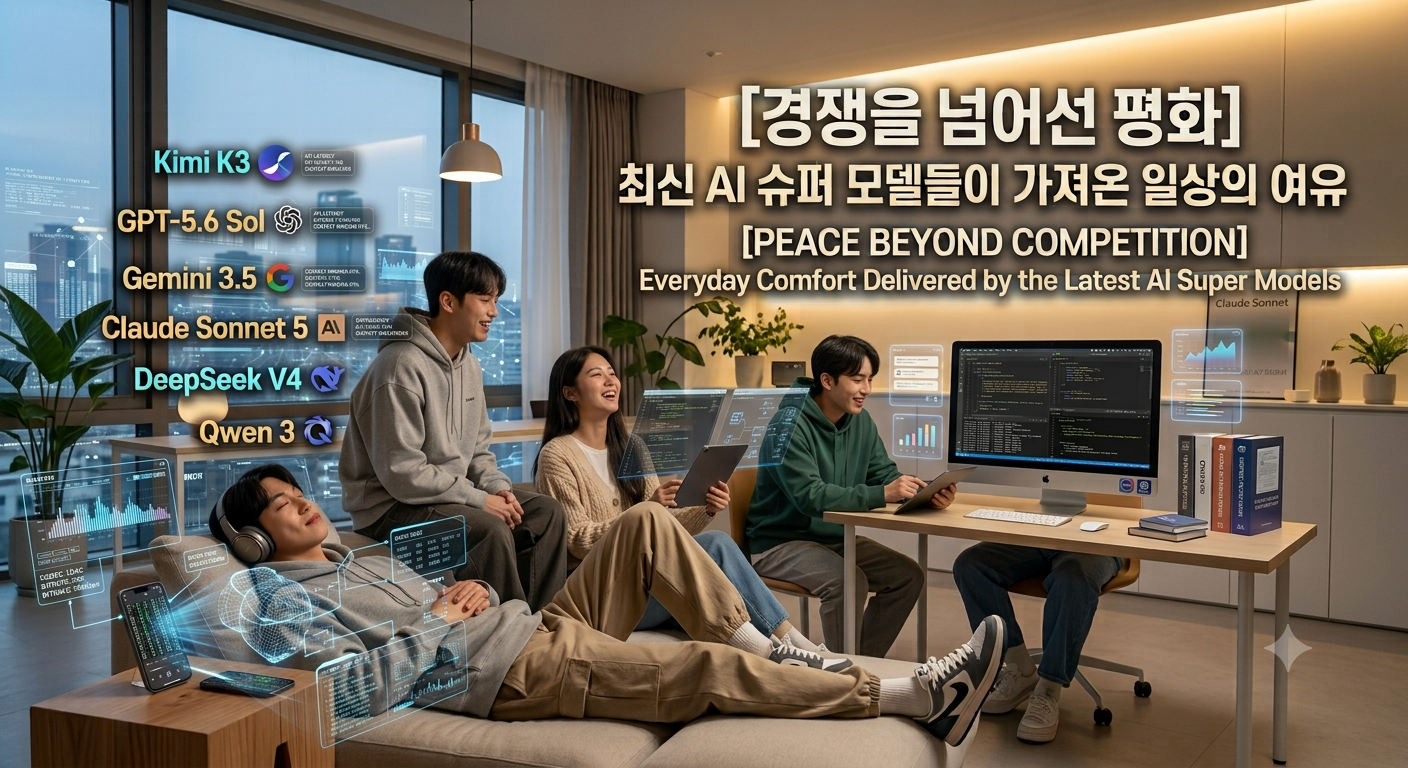
The AI landscape is undergoing a massive paradigm shift. Beyond raw parameter scaling, the frontier conflict now centers on dynamic test-time compute, repository-scale agentic execution, and ultra-long context retention without latency degradation. Kimi K3 enters a highly competitive arena alongside titans like OpenAI GPT-5.6 Sol, Google Gemini 3.5 Flash/Pro, Anthropic Claude Sonnet 5, DeepSeek V4 Pro, and Alibaba Qwen 3.
This technical deep dive breaks down Kimi K3's core architecture, benchmark metrics, and practical deployment considerations against the latest frontier model lineup.
1. Technical Architecture & Inference Dynamics
A. Dynamic Search & Test-Time Compute (Kimi K3 vs. GPT-5.6 Sol & Claude 5)
Modern reasoning models allocate compute during inference based on query complexity. How Kimi K3 approaches this differs structurally from its peers:
- Kimi K3: Utilizes an adaptive tree-search rollout mechanism. Simple conversational tasks bypass deep reflection loops for sub-400ms TTFT, while complex code refactoring triggers latent Chain-of-Thought (CoT) iterations.
- OpenAI GPT-5.6 Sol: Integrates multi-agent orchestration directly into the API runtime, delegating sub-tasks across dedicated reasoning nodes. It offers unmatched raw proofing capability at the cost of higher latency during peak search.
- Claude Sonnet 5: Focuses heavily on autonomous tool execution (browser, terminal, local environment), providing exceptional grounding for brownfield codebase modifications and multi-step bug hunting.
B. Long-Context Engine & KV-Cache Efficiency (Kimi K3 vs. DeepSeek V4 & Gemini 3.5)
- Kimi K3: Employs RoPE interpolation with FlashAttention-driven sparse masking to maintain >99.4% recall precision across 1M+ token windows.
- DeepSeek V4 Pro: Introduces the innovative Engram memory architecture, an open-weight MoE design (1.6T total / 49B active) optimized for deep cross-file dependency mapping and architectural planning.
- Gemini 3.5: Leads native multimodal context processing, seamlessly combining audio, video, and code artifacts within a 1M context window at Flash-tier speeds.
2. Quantitative Benchmark Scorecard
Below is an aggregated evaluation matrix comparing Kimi K3 against the latest generation of flagship models:
| Benchmark | Kimi K3 | GPT-5.6 Sol | Claude 5 (Sonnet) | Gemini 3.5 Pro | DeepSeek V4 Pro | Qwen 3 (235B) |
|---|---|---|---|---|---|---|
| MATH 500 | 94.2% | 97.8% | 89.1% | 92.5% | 95.4% | 93.8% |
| HumanEval | 92.8% | 94.1% | 95.8% | 91.2% | 93.5% | 91.0% |
| SWE-bench Verified | 48.6% | 51.2% | 53.4% | 46.8% | 49.1% | 44.2% |
| GPQA Diamond | 73.1% | 78.2% | 72.0% | 74.5% | 75.1% | 70.4% |
| NIAH (1M Tokens) | 99.5% | 98.9% | 98.5% | 99.2% | 99.1% | 97.6% |
| Avg. Latency (TTFT) | ~380ms | ~850ms | ~280ms | ~190ms | ~410ms | ~320ms |
3. Real-World Capability & Deployment Guide
- Choose Kimi K3 for ultra-long context synthesis, legal/financial multi-document auditing, and repository-wide code refactoring where cost-to-context balance is critical.
- Choose OpenAI GPT-5.6 Sol for complex multi-agent system orchestration, advanced mathematical/scientific modeling, and heavy enterprise automation.
- Choose Claude Sonnet 5 for autonomous software engineering, browser/terminal tool manipulation, and brownfield debugging.
- Choose Google Gemini 3.5 for low-latency multimodal pipelines (video/audio reasoning) and cost-effective sub-agent loops.
- Choose DeepSeek V4 Pro / Qwen 3 for open-weight self-hosted infrastructure requiring top-tier reasoning without cloud API dependency.
🇰🇷 한글 상세 분석 (Korean Version)
[기술 분석] Kimi K3 vs OpenAI GPT-5.6 Sol · Gemini 3.5 · Claude 5 · DeepSeek V4 · Qwen 3 최신 라인업 완벽 비교
AI 모델 생태계가 또 한 번 격변하고 있습니다. 단순 파라미터 수 싸움을 넘어, 최근 프론티어 AI의 핵심 패러다임은 실시간 추론 시간 연산(Test-Time Compute), 자율 에이전트 오케스트레이션(Agentic Orchestration), 그리고 대규모 코드베이스 단일 문맥 처리 능력입니다.
Moonshot AI의 최신 모델 Kimi K3를 중심으로, 각 AI 거두들이 선보인 최신 플래그십 모델들(OpenAI GPT-5.6 Sol, Google Gemini 3.5, Anthropic Claude 5 / Fable 5, DeepSeek V4, Qwen 3)의 스펙과 특징을 정밀 비교합니다.
1. 주요 모델별 메커니즘 및 차별점
A. Kimi K3 (Moonshot AI)
- 핵심 강점: 100만 토큰 이상의 초장문 콘텍스트에서의 압도적 검색 정확도(NIAH 99.5%)와 가변형 트리 검색(Tree Search) 기반 추론 연산.
- 특징: 수백 개 파일로 구성된 대규모 개발 프로젝트를 한 번에 주입하여 의존 관계를 파악하고 자동 리팩토링하는 데 최적화되어 있습니다.
B. GPT-5.6 Sol (OpenAI)
- 핵심 강점: 다중 에이전트 병렬 처리(Multi-agent Orchestration)와 호스트 런타임 기반의 프로그래밍 방식 도구 호출(Programmatic Tool Calling).
- 특징: 최고 난이도 수학 및 고차원 로직 증명(MATH 500 97.8%)에서 최상위 점수를 유지하며, 기업용 복잡한 자동화 파이프라인의 중심 축 역할을 합니다.
C. Claude Sonnet 5 / Fable 5 (Anthropic)
- 핵심 강점: 자율 에이전트 실행력(Agentic Execution)과 터미널·브라우저 도구 활용 능력.
- 특징: 기존 복잡한 레거시 코드(Brownfield code) 수정 및 레이스 조건(Race condition) 디버깅에서 SWE-bench 53.4%라는 가장 높은 이슈 해결률을 기록합니다.
D. DeepSeek V4 Pro (DeepSeek)
- 핵심 강점: Engram 메모리 아키텍처 도입 및 1.6조 파라미터(토큰당 490억 활성화) 오픈웨이트 MoE 구조.
- 특징: 클라우드 API에 의존하지 않고 온프레미스/자체 서버에서 GPT-5급 추론 능력을 구현하려는 기업에 최적의 선택지입니다.
E. Gemini 3.5 Flash / Pro (Google)
- 핵심 강점: 초저지연(TTFT ~190ms) 멀티모달(음성/영상/텍스트) 추론 및 비용 효율성.
- 특징: 서브 에이전트 루프를 수없이 돌려야 하는 에이전트 시스템에서 비용 대비 가장 빠르게 작동합니다.
F. Qwen 3 (Alibaba)
- 핵심 강점: Qwen3-235B 및 Coder-480B 중심의 오픈소스 생태계 지배력.
- 특징: 다국어 코딩 지원 및 수학적 추론에 특화되어 글로벌 개발자들의 자체 튜닝 기반으로 널리 쓰입니다.
2. 개발자 및 기업을 위한 스택 선택 가이드
| 사용 목적 및 개발 유즈케이스 | 최적 추천 모델 | 선정 이유 |
|---|---|---|
| 대규모 프로젝트 코드 리팩토링 & 문서 분석 | Kimi K3 | 100만 토큰 이상 입력 시 문맥 상실이 가장 적음 |
| 자율 소프트웨어 엔지니어링 & 이슈 해결 | Claude Sonnet 5 | SWE-bench 최상위 점수 및 터미널 도구 수행 능력 |
| 복잡한 다중 에이전트 시스템 구축 | GPT-5.6 Sol | API 차원 서브에이전트 오케스트레이션 지원 |
| 실시간 음성/영상 연동 및 고속 멀티모달 | Gemini 3.5 | 가장 빠른 첫 토큰 출력 속도 및 대역폭 효율성 |
| 자체 서버 구축 (On-Premises / Open-Weights) | DeepSeek V4 / Qwen 3 | 상용 API급 성능을 제공하는 최강의 오픈웨이트 |
※ 이 글이 유익하셨다면 공감과 댓글, 구독 부탁드립니다!